Fractured Landscapes and how we heal - An exhibition by Jaskirt Dhaliwal-Boora
The Peter Marlow Foundation is proud to have been a partner on "Fractured Landscapes and how we heal" and invite you to attend the exhibition at The New Art Gallery Walsall from March 28th until 21st June 2026.
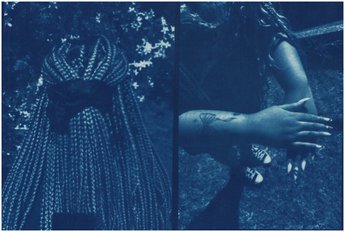
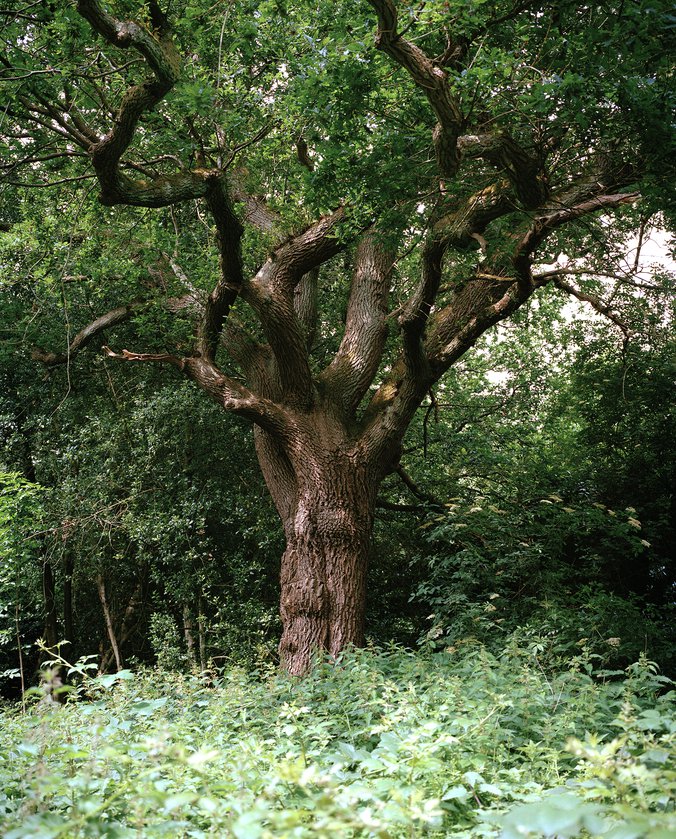
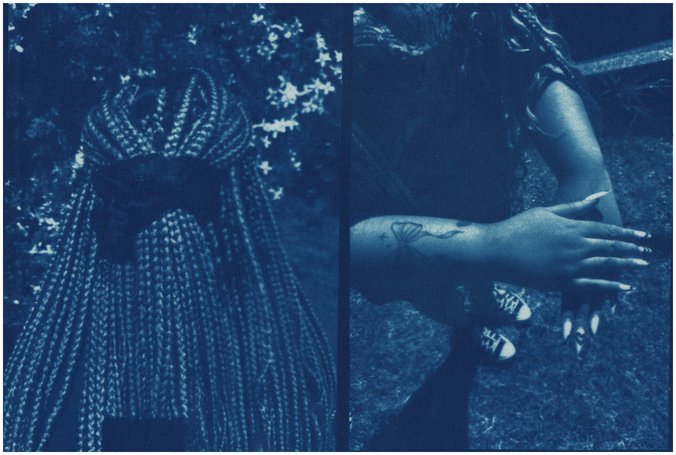
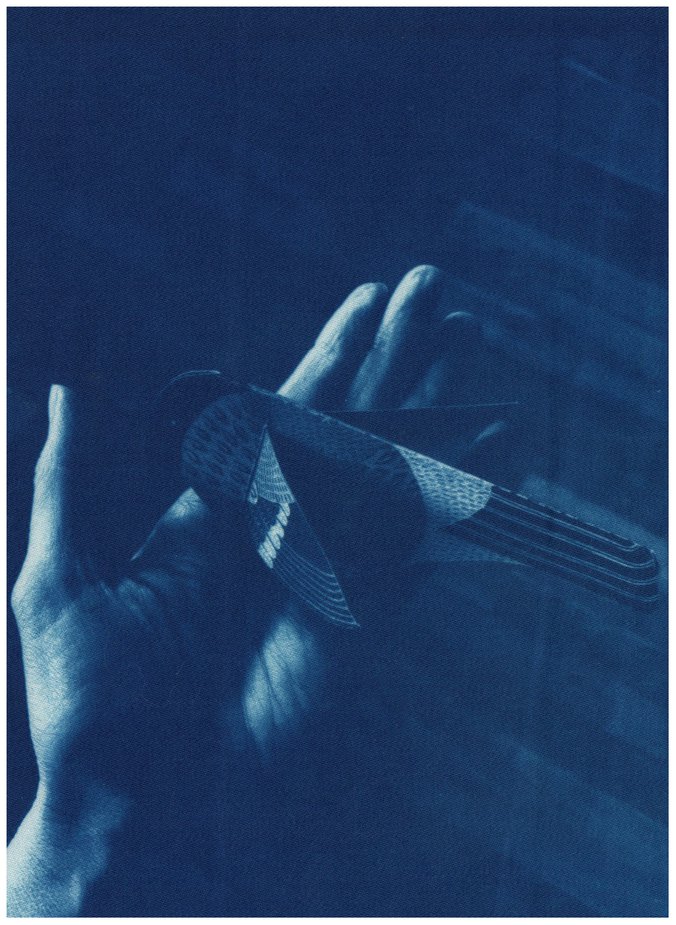
This exhibition focuses on the role that nature and creativity can play in healing from trauma, particularly in the context of domestic violence and abuse against women and girls. New photographic work by Jaskirt Dhaliwal-Boora will feature alongside works created by women from four refuges across the country, each working with a lead artist to inspire and encourage them. Artist Katy Sadler has worked with Birmingham & Solihull Women’s Aid, Audrey Albert has worked with Chrysalis Centre, Liverpool, Lynn Weddle has worked with Safe in Sussex in Worthing and Lynda Laird has worked with Oasis in Gravesend.
Jaskirt had this to say about the project, "Fractured Landscapes and how we heal culminates 6 years of practice-based research of working with women's refuges. The opportunity to create an exhibition of new work with The New Art Gallery Walsall prompted me to expand my previous work to a national scale to amplify the stories of women who have experienced male violence. I’m very thankful for the support from Peter Marlow Foundation, especially Shannon Ghannam, in enabling the opportunity to work with Oasis and artist Lynda Laird. Lynda has been nothing short of inspirational in the workshops she has led with women at Oasis. Her thoughtful and caring practice embodies the spirit of Fractured Landscape and how we heal, giving each woman an opportunity to learn new skills, build their confidence and experiment. The focus in the national series of workshops was to create a safe space for women to creatively express themselves for their emotional wellbeing, and an opportunity for them to share this work in the exhibition if they wished to. I’m delighted that the final collaborative quilt features the work of all the women that participated in Lynda’s workshops.
The quilt will feature in the exhibition at The New Art Gallery Walsall and Open Eye Gallery before returning to a permanent display at Oasis. The seismic actions of male violence can be fatal, for many of the women involved in this work it has caused significant, life changing disruption, trauma and loss. No doubt to the men too, if they realise it or not. And when funding to services that protect women are being cut, the emotional needs to recover from trauma are also lost. Which begs the question if the women’s needs to recover are not met as a minimum, is there any effective rehabilitation to stop men reoffending?
There is no quick fix to heal from trauma, it can take years of work. The series of workshops at Oasis led by Lynda, with support from Shannon and the Peter Marlow Foundation, were only a start, yet demonstrate the positive impact and benefit photography can have to our health and wellbeing."
This exhibition focuses on the role that nature and creativity can play in healing from trauma, particularly in the context of domestic violence and abuse against women and girls. New photographic work by Jaskirt Dhaliwal-Boora will feature alongside works created by women from four refuges across the country, each working with a lead artist to inspire and encourage them. Artist Katy Sadler has worked with Birmingham & Solihull Women’s Aid, Audrey Albert has worked with Chrysalis Centre, Liverpool, Lynn Weddle has worked with Safe in Sussex in Worthing and Lynda Laird has worked with Oasis in Gravesend.
Jaskirt had this to say about the project, "Fractured Landscapes and how we heal culminates 6 years of practice-based research of working with women's refuges. The opportunity to create an exhibition of new work with The New Art Gallery Walsall prompted me to expand my previous work to a national scale to amplify the stories of women who have experienced male violence. I’m very thankful for the support from Peter Marlow Foundation, especially Shannon Ghannam, in enabling the opportunity to work with Oasis and artist Lynda Laird. Lynda has been nothing short of inspirational in the workshops she has led with women at Oasis. Her thoughtful and caring practice embodies the spirit of Fractured Landscape and how we heal, giving each woman an opportunity to learn new skills, build their confidence and experiment. The focus in the national series of workshops was to create a safe space for women to creatively express themselves for their emotional wellbeing, and an opportunity for them to share this work in the exhibition if they wished to. I’m delighted that the final collaborative quilt features the work of all the women that participated in Lynda’s workshops.
The quilt will feature in the exhibition at The New Art Gallery Walsall and Open Eye Gallery before returning to a permanent display at Oasis. The seismic actions of male violence can be fatal, for many of the women involved in this work it has caused significant, life changing disruption, trauma and loss. No doubt to the men too, if they realise it or not. And when funding to services that protect women are being cut, the emotional needs to recover from trauma are also lost. Which begs the question if the women’s needs to recover are not met as a minimum, is there any effective rehabilitation to stop men reoffending?
There is no quick fix to heal from trauma, it can take years of work. The series of workshops at Oasis led by Lynda, with support from Shannon and the Peter Marlow Foundation, were only a start, yet demonstrate the positive impact and benefit photography can have to our health and wellbeing."
This piece of reflective writing by Lynda about her experience features in an accompanying publication. "The workshops we developed with women through Oasis, a domestic abuse charity, grew from an exploration of plant-based photographic processes, both as a more sustainable approach to photography and as a therapeutic practice. I first turned to these methods during a difficult period in my own life, discovering how profoundly working slowly with plants and being in nature could restore balance and support mental health. That experience led me to wonder how such practices might also nurture and sustain others.
During an artist residency at Prospect Cottage in Dungeness, I continued to experiment with plants while immersing myself in Derek Jarman’s Modern Nature, his reflections on cultivating a resilient garden amid the shingle and winds of Dungeness. Jarman created beauty in a barren place, transforming loss into abundance. Tending his garden became a way to grieve, but also to imagine renewal, transforming isolation into growth and discovering how creativity and nature can offer hope and resilience during dark times.
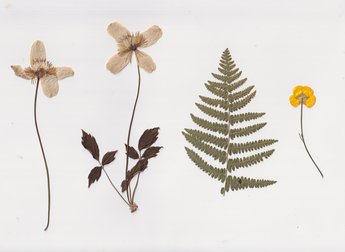
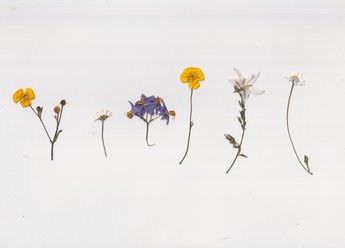
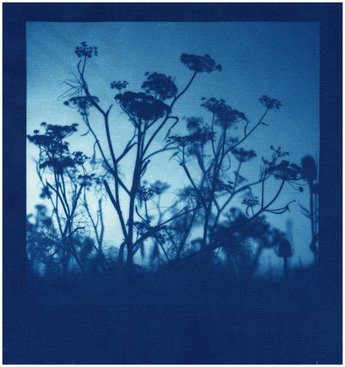
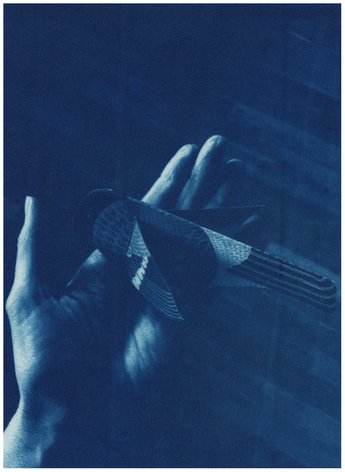
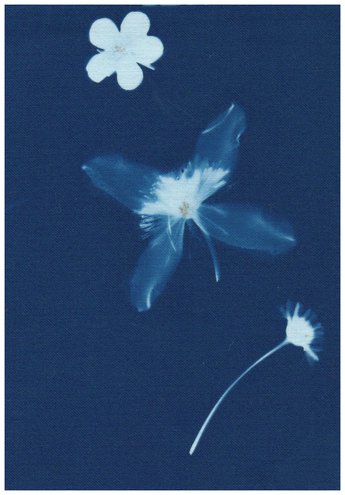
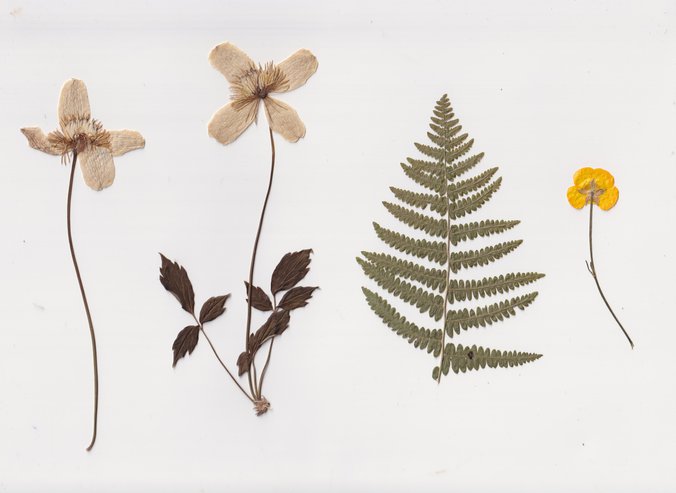
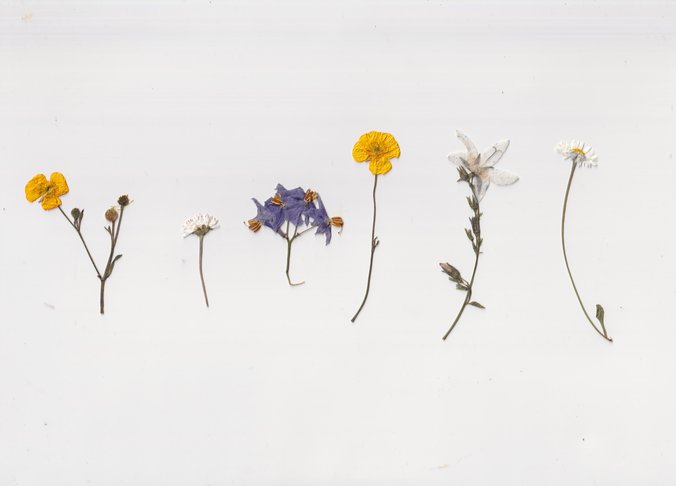
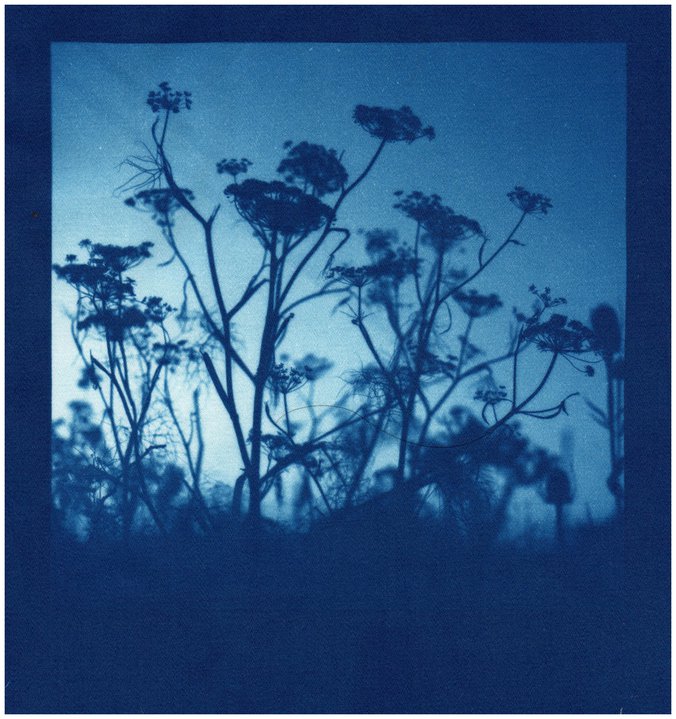
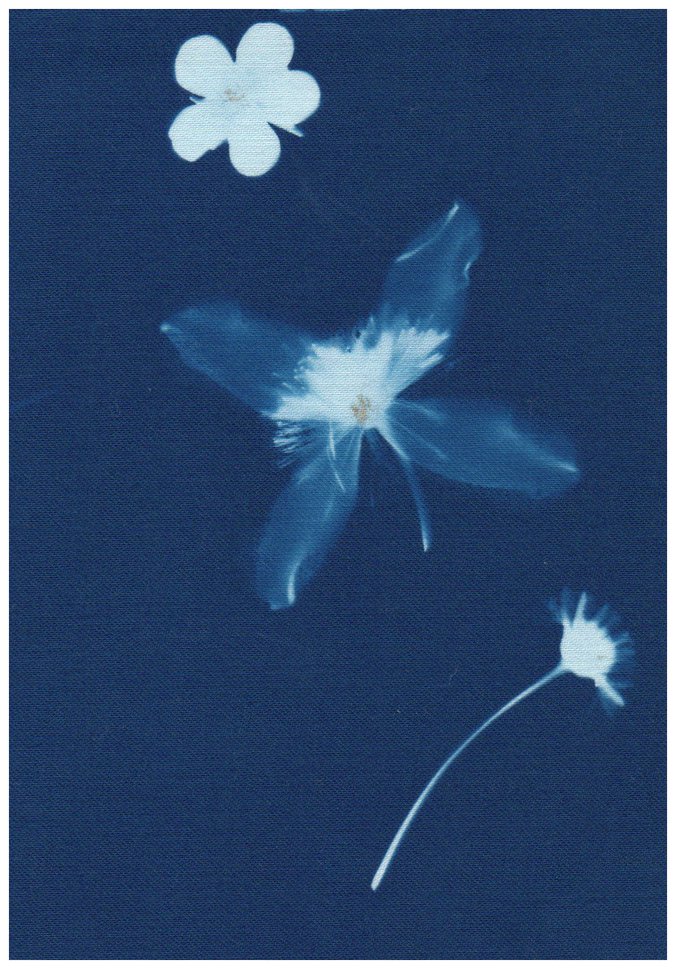
Inspired by this, our workshops unfolded in the centre’s garden across five sunlit sessions. Six young women joined us, hesitant at first, but gradually they began to settle into the rhythm of the space. Together we gathered leaves and flowers, crushing them into emulsions for anthotypes, printing photographs onto leaves through chlorophyll printing, and exposing cyanotypes in the sun, layering images with flowers, leaves, shells, and words.
The early sessions were playful and exploratory, full of experimentation and discovery, yet even in moments of quiet focus it was clear that the young women carried a growing sense of pride. They were working toward something that would be seen and shared beyond the garden, and this awareness lent a gentle confidence to their actions, a sense that their contributions mattered. Step by step, layer by layer, these small experiments and discoveries built naturally toward a final collaborative artwork: a quilt inspired by the idea of home, reflecting not only the space we worked in but also the care, creativity, and resilience they brought to it.
At the refuge, each young woman arrives to receive a hand-stitched patchwork quilt made by a group of local makers. When they move into a new home, they take the quilt with them, a symbol of comfort and continuity. Our project echoed this gesture. The participants selected images, plants, and fragments of lyrics that spoke to their sense of home, and what safety, joy, and belonging meant to them. These were printed onto cyanotype fabric and pieced together into a communal quilt, stitched by one of the makers.
Together, the quilt became a shared expression, weaving many individual stories into a single, protective form.
In the garden, working side by side, the young women shaped something both fragile and enduring, a living reminder that, like trees and plants, we can root ourselves again in light, resilience, and care."
During an artist residency at Prospect Cottage in Dungeness, I continued to experiment with plants while immersing myself in Derek Jarman’s Modern Nature, his reflections on cultivating a resilient garden amid the shingle and winds of Dungeness. Jarman created beauty in a barren place, transforming loss into abundance. Tending his garden became a way to grieve, but also to imagine renewal, transforming isolation into growth and discovering how creativity and nature can offer hope and resilience during dark times.
Inspired by this, our workshops unfolded in the centre’s garden across five sunlit sessions. Six young women joined us, hesitant at first, but gradually they began to settle into the rhythm of the space. Together we gathered leaves and flowers, crushing them into emulsions for anthotypes, printing photographs onto leaves through chlorophyll printing, and exposing cyanotypes in the sun, layering images with flowers, leaves, shells, and words.
The early sessions were playful and exploratory, full of experimentation and discovery, yet even in moments of quiet focus it was clear that the young women carried a growing sense of pride. They were working toward something that would be seen and shared beyond the garden, and this awareness lent a gentle confidence to their actions, a sense that their contributions mattered. Step by step, layer by layer, these small experiments and discoveries built naturally toward a final collaborative artwork: a quilt inspired by the idea of home, reflecting not only the space we worked in but also the care, creativity, and resilience they brought to it.
At the refuge, each young woman arrives to receive a hand-stitched patchwork quilt made by a group of local makers. When they move into a new home, they take the quilt with them, a symbol of comfort and continuity. Our project echoed this gesture. The participants selected images, plants, and fragments of lyrics that spoke to their sense of home, and what safety, joy, and belonging meant to them. These were printed onto cyanotype fabric and pieced together into a communal quilt, stitched by one of the makers.
Together, the quilt became a shared expression, weaving many individual stories into a single, protective form.
In the garden, working side by side, the young women shaped something both fragile and enduring, a living reminder that, like trees and plants, we can root ourselves again in light, resilience, and care."
The project will tour to Open Eye, Liverpool in November 2026.
The project has been supported by and Arts Council England Project Grant with further support from Open Eye Gallery, Photo Fringe and Peter Marlow Foundation.
The project has been supported by and Arts Council England Project Grant with further support from Open Eye Gallery, Photo Fringe and Peter Marlow Foundation.
Biographies
Jaskirt Dhaliwal-Boora (panjabi, brummie, artist, mother, educator) is a multi-disciplinary artist with a socially engaged practice, working with local communities on global issues. She is interested in celebrating untold stories while exploring visual
representations of gender, ethnicity and place. Jaskirt creates work with the aim to empower and give voice to marginalised communities. In 2025 she was the recipient of the Royal Photographic Society's Social Practice Award, and previously she has won the British Journal of Photography's Portrait of Britain award for three consecutive years (2021-24), and the LensCulture Photo Art award (2024). Recent Highlights include a place called home being exhibited at Peckham24 in 2025, in the theme Come Together and Green Spaces for the Ikon Creative Health exhibition. Currently Jaskirt is working on Fractured Landscapes and how we heal which will be a major exhibition at The New Art Gallery Walsall, before touring to Open Eye Gallery in 2026. This work has been made possible through a 2.5 year Arts Council England Project Grant. Her work has been exhibited nationally and internationally, including at Wembley Stadium, UN Headquarters New York, Peckham24, New Art Exchange Nottingham and Manchester’s People Museum. Her work Birmingham Lockdown Stories (2020) is held in the permanent archive and collection of the Birmingham Museums Trust. Jaskirt is also the founder of Luna, a grassroots network for women, women-identifying and non-binary photographers in Birmingham and the West Midlands and a Senior Lecturer at Birmingham City University.
Jaskirt Dhaliwal-Boora (panjabi, brummie, artist, mother, educator) is a multi-disciplinary artist with a socially engaged practice, working with local communities on global issues. She is interested in celebrating untold stories while exploring visual
representations of gender, ethnicity and place. Jaskirt creates work with the aim to empower and give voice to marginalised communities. In 2025 she was the recipient of the Royal Photographic Society's Social Practice Award, and previously she has won the British Journal of Photography's Portrait of Britain award for three consecutive years (2021-24), and the LensCulture Photo Art award (2024). Recent Highlights include a place called home being exhibited at Peckham24 in 2025, in the theme Come Together and Green Spaces for the Ikon Creative Health exhibition. Currently Jaskirt is working on Fractured Landscapes and how we heal which will be a major exhibition at The New Art Gallery Walsall, before touring to Open Eye Gallery in 2026. This work has been made possible through a 2.5 year Arts Council England Project Grant. Her work has been exhibited nationally and internationally, including at Wembley Stadium, UN Headquarters New York, Peckham24, New Art Exchange Nottingham and Manchester’s People Museum. Her work Birmingham Lockdown Stories (2020) is held in the permanent archive and collection of the Birmingham Museums Trust. Jaskirt is also the founder of Luna, a grassroots network for women, women-identifying and non-binary photographers in Birmingham and the West Midlands and a Senior Lecturer at Birmingham City University.
Lynda Laird is a documentary photographic artist whose work interweaves research, archival material, photography, moving image and sound. Her practice is centered on exploring the materiality of landscapes, often employing camera-less techniques and integrating materials directly sourced from these environments, creating images that physically embed traces of the landscapes' history and essence into the work.
Lynda recently worked as the photographic artist in residence at the Royal Astronomical Society, where she focused her research on the celestial discoveries of the 18th century astronomer Caroline Herschel. She was awarded an Arts Council project grant to turn her research into a touring installation which was shown at the Royal Astronomical Society, Jodrell Bank First Light Pavilion, The Herschel Museum, Solaris Gallery, the Orkney Science Festival and is currently part of the 'Cosmos' show at the RWA Bristol.
Lynda also works as an Associate Lecturer on the MA in Documentary Photography and Photojournalism at London College of Communication, and as a picture editor at The Observer.
Lynda recently worked as the photographic artist in residence at the Royal Astronomical Society, where she focused her research on the celestial discoveries of the 18th century astronomer Caroline Herschel. She was awarded an Arts Council project grant to turn her research into a touring installation which was shown at the Royal Astronomical Society, Jodrell Bank First Light Pavilion, The Herschel Museum, Solaris Gallery, the Orkney Science Festival and is currently part of the 'Cosmos' show at the RWA Bristol.
Lynda also works as an Associate Lecturer on the MA in Documentary Photography and Photojournalism at London College of Communication, and as a picture editor at The Observer.